lodine and the Thyroid: How Much Is Just Right?
Iodine is a mineral that many people associate with the need to “get enough” because iodine deficiency can lead to goiter. However, there is another side that receives less attention: consuming too much iodine can also affect the body, especially in people who already have thyroid conditions.
Why Is Iodine Important?
Iodine is an essential component used by the thyroid gland to produce thyroid hormones. These hormones regulate metabolism, growth, and the function of various organs. The body needs an appropriate amount of iodine—neither too much nor too little—to keep the thyroid functioning properly.
Too Much Iodine Can Also Be a Problem
Many people assume that more iodine is always better. In reality, excessive iodine intake may trigger or worsen certain thyroid conditions, including:
Hyperthyroidism: Doctors may recommend limiting iodine during certain stages of treatment.
Preparation for a radioactive iodine thyroid scan: Patients may need to strictly control their iodine intake before the procedure.
Certain types of thyroiditis: Excess iodine may trigger or worsen symptoms.
People in these groups are often advised to avoid foods and seasonings that are high in iodine. This can be challenging because iodized salt is widely used in many seasoning products as part of national iodine-deficiency prevention measures.
Recommended Daily Iodine Intake
General adults: Approximately 150 micrograms of iodine per day is recommended by the World Health Organization and Thailand’s Ministry of Public Health. As a simple guideline, iodized salt intake should not exceed approximately one teaspoon per day.
Pregnant and breastfeeding women: They require more iodine than other adults because additional thyroid hormones are needed to support the baby’s growth and development. Individual medical guidance is recommended.
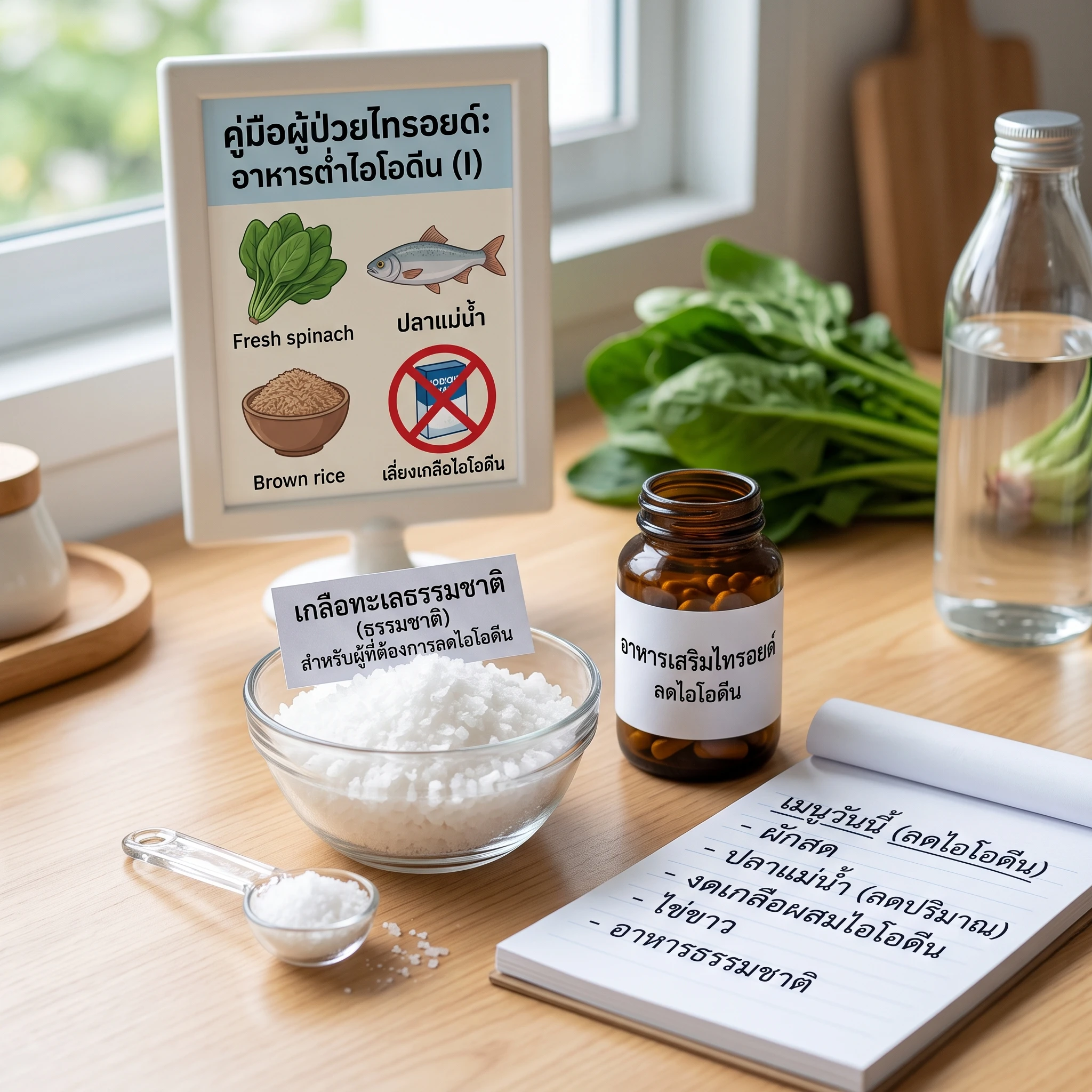
People following a low-iodine diet: Patients preparing for radioactive iodine treatment—such as those with thyroid cancer or hyperthyroidism—are often advised to limit iodine intake to less than 50 micrograms per day for approximately one to two weeks before treatment. This makes the thyroid “hungry” for iodine, allowing it to absorb radioactive iodine more effectively.
The difference between 150 and 50 micrograms is threefold. This is why patients following a low-iodine diet must read food and seasoning labels particularly carefully. Even a small amount of iodized salt in each meal can make it much easier to exceed the target established by their doctor.
The appropriate amount should always be determined with guidance from a doctor or registered dietitian, as it may vary depending on the person’s condition and treatment plan.
Common Dietary Sources of Iodine
Iodized salt, which is used as a basic ingredient in many seasoning products
Seafood and seaweed
Dairy products
Egg yolks
What to Do if You Are at Risk of Thyroid Problems
If you have a thyroid condition, consult your doctor or a registered dietitian to determine the appropriate level of iodine restriction.
Check seasoning labels to see whether iodized salt is used. If this information is not provided, you may need to contact the manufacturer directly.
During periods when your doctor recommends avoiding iodine—such as before a thyroid scan—choose particularly low-iodine seasonings and temporarily avoid seafood and seaweed.
If you do not have a thyroid condition, there is generally no need for excessive concern. A varied diet in appropriate portions is usually sufficient.
Summary
Iodine is a mineral that requires balance—more is not always better. This is particularly important for people with thyroid conditions. Choosing seasonings that suit your individual health needs and consulting a doctor when necessary are important aspects of health management that are often overlooked.
BLOG & NEWS